
5 Solo Activities to Get You Out of the House Without Overwhelming Your Nervous System
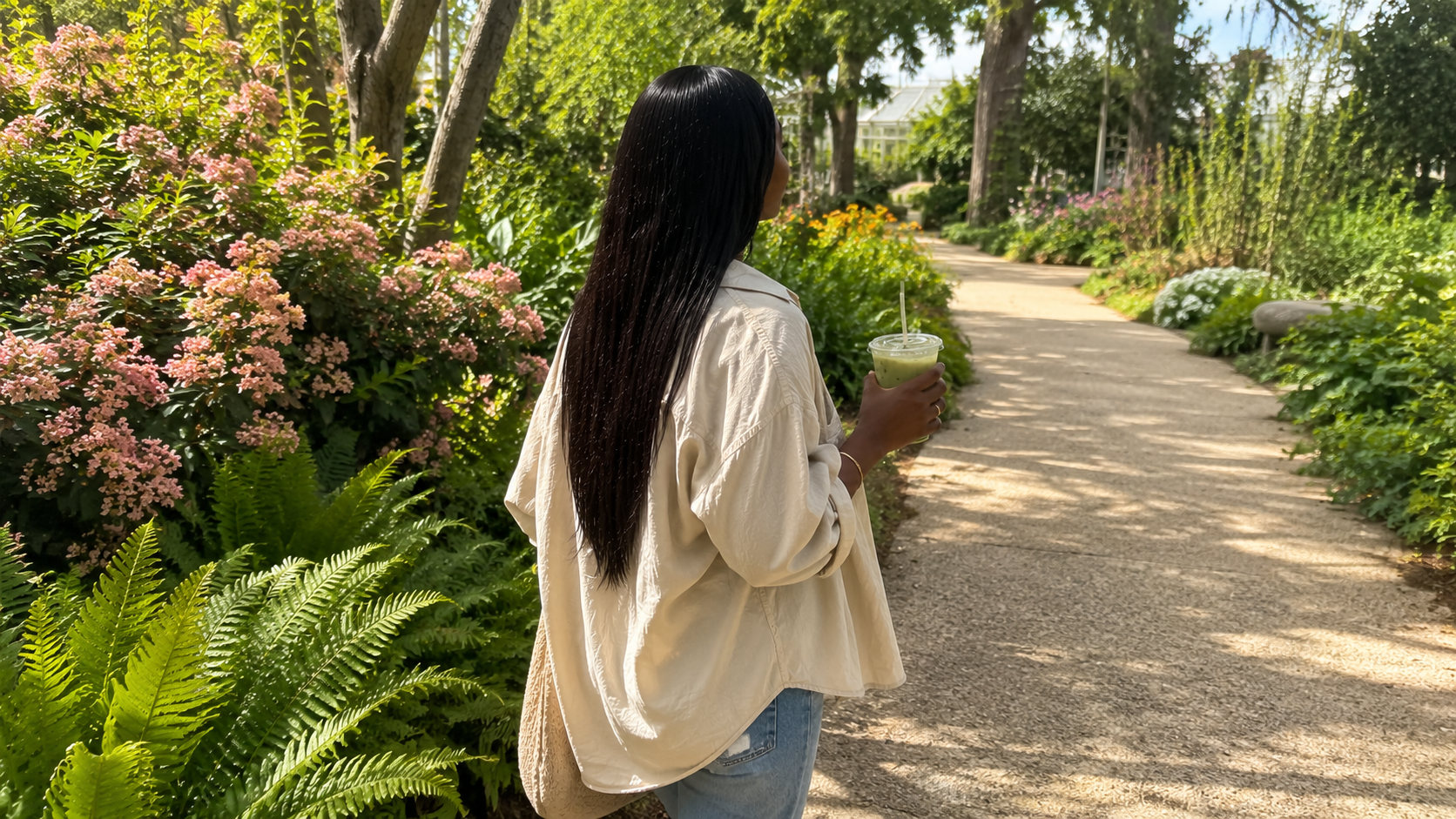
Gentle solo date ideas for low-energy days
You do not have to be social to need to leave the house. You may just need the right kind of out.
Sometimes you know a change of scenery would help, but every option sounds like too much. A crowded restaurant means noise. Plans with friends mean coordinating. A full day out means getting dressed, driving across town, spending money, and finding energy you do not have.
So you stay home, even though home is starting to feel a little too small.
These five solo activities are for that exact mood. They are quiet, flexible, and easy to shorten. You can be around the world without having to perform for it.
- Take a walk with no errand attached.
- Sit in a quiet cafe without turning it into a work session.
- Wander through a bookstore or library.
- Sit in a park, garden, or near water.
- Visit a museum, gallery, aquarium, or local landmark at your own pace.
There is no perfect choice here. Pick the activity that matches the energy you actually have, not the energy you think you should have.
Choose Your Solo Activity by Energy Level
Sit outside for ten minutes. Your only job is to leave the building.
Take the purposeless walk and give your body somewhere to go.
Try a cafe, bookstore, or library where other people can simply exist nearby.
Choose a museum, gallery, botanical garden, or local place you have never entered.
Free Soft Girl Reset Kit™
Not Sure What Kind of Reset You Need?
Answer four honest questions and find the life layer that needs your attention first. The free Reset Kit looks at all six layers, including the OUT layer, then gives you a simple three-step starting point.
Free · Opens in your browser · Instant access
5 Solo Activities That Get You Out Without Draining You
Take a Purposeless Walk
This is not an exercise challenge, a step goal, or an errand disguised as self-care. It is a walk with nowhere useful to be.
That lack of purpose matters. When every part of your day has been about accomplishing something, a short walk can give you a pocket of time where nothing is being measured. You get different scenery, a little movement, and room for your thoughts to loosen without demanding that they disappear.
- Choose a familiar, well-lit route so you do not have to plan.
- Leave the podcast for another day if more input sounds tiring.
- Notice five ordinary details you usually pass without seeing.
- Turn around whenever you want. Ten minutes still counts.
The minimum version: Walk to the end of your street, pause, and walk home. You do not have to earn the longer version.
Sit in a Cafe Without Working
A solo cafe date lets you be near people without being responsible for anyone else’s experience. You can sit by a window, hold something warm, and remember that you are part of a world larger than your living room.
The important part is not turning it into another productivity session. You do not need your laptop, a color-coded plan, or proof that the outing was useful. Bring a book, write one page in your journal, or simply watch the room.
- Choose a familiar cafe during a quieter hour.
- Look at the menu before you go if ordering makes you anxious.
- Sit near an exit or outside if that helps you feel comfortable.
- Give yourself permission to leave after ten minutes.
The minimum version: Get a drink to go and sit outside for a few minutes before heading home.
Wander Through a Bookstore or Library
Libraries and bookstores are rare public places where moving slowly makes sense. Nobody expects you to make conversation, finish a task, or buy something. You can pick up a book because the cover catches your eye, read two pages, put it back, and keep wandering.
If being home has started to feel repetitive, this is a gentle way to give your mind something new without stepping into a loud or demanding environment.
- Go without a reading list.
- Start in the section that feels comforting, not impressive.
- Photograph a title you may want later instead of buying it now.
- Find one chair and read until you feel ready to leave.
The minimum version: Walk in, browse one display table, and leave with one title saved in your phone.
Sit Somewhere Outside
You do not always need an activity. Sometimes you need a different place to be.
Try a park bench, your front steps, a community garden, a shaded table, or a safe spot near water. The plan is simply to sit long enough to notice that the light, air, and sounds are different from the ones inside your home.
- Choose the closest comfortable place, not the prettiest one online.
- Bring water, sunglasses, or a layer so discomfort does not rush you.
- Keep your phone available for safety, but let it stay in your bag if you can.
- Notice one thing moving, one thing still, and one sound in the distance.
The minimum version: Sit just outside your home for five minutes. A small change of setting is still a change.
Take Yourself on a Cultural Wander
Choose a museum, gallery, botanical garden, aquarium, historic house, or small local landmark you keep passing. These spaces are built for looking and wandering, which makes them especially comfortable solo activities for women who want to go somewhere without creating a social event.
Going alone also means you can linger over one painting for ten minutes and skip an entire floor without negotiating. Your pace belongs to you.
- Check the quietest hours and admission price before leaving.
- Look for free days, library passes, or smaller community spaces.
- Choose one area to see instead of trying to complete the whole venue.
- Find one thing that surprises you. That can be the entire takeaway.
The minimum version: Visit one free gallery room or spend fifteen minutes at a nearby landmark.
How to Make a Solo Outing Feel Less Overwhelming
- Choose the smallest useful version. A ten-minute outing is easier to begin than an undefined afternoon.
- Go during a quiet window. Weekday mornings, the first hour after opening, and the last hour before closing are often calmer.
- Decide your exit plan first. Knowing you can leave at any point makes it easier to begin.
- Reduce decisions before you go. Pick the location, route, parking, and spending limit at home.
- Bring one comfort item. Headphones, a cardigan, water, a book, or sunglasses can make an unfamiliar setting feel more manageable.
- Do not make the outing earn its place. It does not need to produce content, steps, networking, or a breakthrough.
Your Right Kind of Out
Pick the feeling you want, then choose the plan
I need movement: Take the purposeless walk.
I want people nearby but no conversation: Sit in a cafe.
I need quiet input: Wander through a bookstore or library.
I have almost no energy: Sit somewhere outside.
I want to feel curious again: Take yourself on a cultural wander.
You do not need to stay out for hours. You do not need to spend money. You do not need to come home transformed. The goal is smaller and more honest: leave the same four walls, let the day show you something different, and come back when you are ready.
Pick one activity now. Decide where you will go, what time you will leave, and what the minimum version looks like. That tiny plan is enough to make this more than another article you meant to use someday.
Your next gentle step
Find the Part of Your Life That Needs Attention First
If getting out is only one part of feeling stuck, the free Soft Girl Reset Kit™ can help you see the bigger picture. Four questions identify which of your six life layers needs support, then give you a specific three-step place to begin.
Get My Free Reset Kit →Free · No email required · Instant access in your browser
Dear Soft Girl ♡
Save this list to Pinterest for the next day you need to leave the house without making a whole event out of it.





Join the List
Stay up to date & receive the latest posts in your inbox.
One Comment